
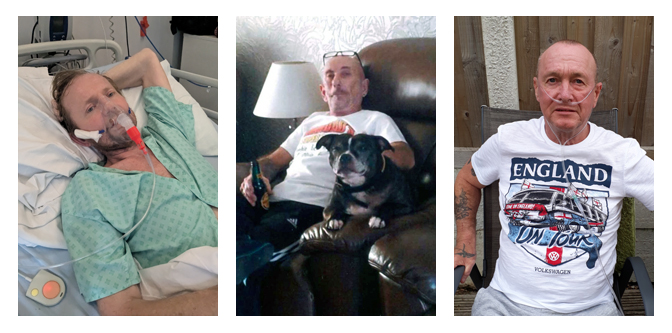
Health and Safety Executive (HSE) is just talking prevention.
Their stories were similar. Both were stone dressers. Both lived and worked in Bradford, surrounded by the rugged sandstone bluffs that fringe the southern edge of the Yorkshire Dales. And both died before they could claim their pension.
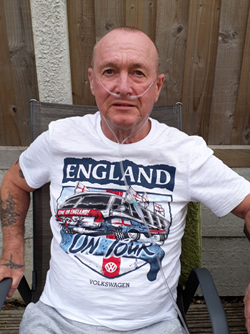
FAMILY’S PAIN Paul Gray suffered a “terrible” death from silicosis, his widow Joanne said. “Nobody deserves to go through what Paul did as a result of their job.”
Paul Gray and Stuart Johnson succumbed to silicosis, caused by inhaling the silica dust that filled the air as they worked.
West Yorkshire – but notably Bradford – with its sandstone quarries and stoneyards is a recognised hotspot for silicosis, say workplace disease lawyers at Irwin Mitchell, who represented the widows of both men.
Paul (right) had worked as a stone dresser from 1997 to 2017. He would fashion quarried stone into paving slabs, using power tools, including saws and hand tools, including hammers and chisels.
He was never provided with overalls made from low dust retention fabric. There were no changing or cleaning facilities and no provision for the removal of silica-clogged clothing. Paul said he was never provided with any respiratory protective equipment (RPE) during his career.
He had been in good health until he started to experience breathing difficulties in October 2017. He was diagnosed with silicosis in November 2017.
Once you have breath-stealing silicosis, you are in trouble. The disease is ‘progressive’, so worsens continually and often quickly, even if you are no longer exposed to silica dust.
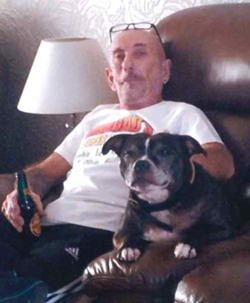
WIDOW’S HOPE Before developing silicosis, Stuart Johnson loved extended walks with his wife Carol and the family dogs. “I hope some good can come for others out of his story and that no other families have to suffer as ours have over recent years,” Carol said.
Paul found himself in and out of hospital with recurrent chest infections. In 2021, he developed pneumonia. By September that year he was admitted to a hospice, where he died aged 57 on 11 September 2021.
Stuart (right) worked on reclaimed sandstone and gritstone, known to have a high silica content. His work tools were a power saw and rock drills, which produced clouds of dust, before dressing the stone with a hammer and chisel.
Stuart told his lawyers he had not been provided with any breathing protection or warned of the dangers of inhaling stone dust.
In 2013 he started to develop a persistent cough. He was diagnosed with chronic obstructive pulmonary disease (COPD).
In 2016, Stuart’s breathing deteriorated and in February 2017 he collapsed at work and was unable to return. He was diagnosed with silicosis in May 2018. He died aged 63 on 7 July 2019.
Generation dead
Both men worked in traditional sandstone industries. They died as evidence emerged of new wave of silicosis cases, in younger workers and killing at an accelerated pace. The upturn is linked to new jobs with ‘artificial stone’, an engineered composite of resins and silica dust.
Marek Marzek, a father of three young girls, worked from 2012 with the artificial stone used to manufacture kitchen tops at firms in southern England (Hazards 167). He described working in a “tornado” of dust.
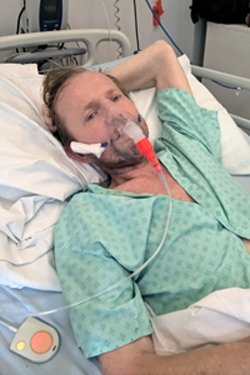
BRUTAL DEATH In the weeks before his death from silicosis, Marek Marzek said he was “angry” his life had been cut short. He added: “It is time for urgent action to stop these dangerous working conditions I had to face before other stone workers contract this terrible disease and die.”
Marek (right) was diagnosed with silicosis in April 2024, dying in hospital on 30 November 2024.
The Health and Safety Executive (HSE) has opened an investigation into Marek death and said it has informed the Metropolitan Police of the case.
But HSE has faced criticism for defending a lax silica safety standard and for a lacklustre response to prevention, particularly when it comes to the much greater risk posed by engineered stone.
At 0.05mg/m3, Australia’s silica occupational exposure standard is already half the level and six times more protective for silicosis than HSE’s – and is set to be halved again. Australia banned engineered stone from workplaces in July 2024; in January 2025 it banned all imports.
In the US, which shares Australia’s more protective standard silica dust exposure standard, artificial stone workers suffering devastating health effects from their exposures and their families have received multimillion-dollar settlements in recent months.
An investigation into the rapid rise in silicosis in the Australian state of Victoria found recorded cases in the eight years from 2015 to 2022 were running at 27 times the rate compared to the eight years before.
The study, published on 20 January 2025 in the American Journal of Industrial Medicine, found almost all (89 per cent) of the 210 silicosis cases identified between 2019 and 2022 “had been referred following participation in a government screening programme for stone countertop industry workers.”
The authors concluded if you don’t look, you don’t find. They said the research “underscores the risk to stone countertop workers and highlights the potential for under-recognition of silicosis without screening at-risk workers, especially in countries where artificial stone has become popular.”
More dust, less action
While the UK continues to defend its more dangerous exposures to workplace silica, it has no equivalent government screening programmes to identify the cases when they occur. HSE’s guidance doesn’t even insist employers monitor their workers’ health until they’ve been in the industry for 15 years. Marek Marzec was dead within 12 years of starting work in the industry.
Wessam al Jundi, another worker in the engineered stone industry, died aged 28 as a result of severe silicosis on 22 May 2024. He’d worked with silica for just eight years.
A 25 October 2024 coroner’s Prevention of Future Deaths report into Wessam’s death questioned HSE’s approach, saying it has the “power” to address a problem that comes with “a risk of death”.
Senior coroner Lydia Brown said the UK’s current surveillance system was “unlikely to achieve a satisfactory outcome” and that the small firms typically working with engineered stone had “an absence of safe working conditions.”
But HSE continues to insist a combination of its weaker standard and supporting guidance will suffice. In January 2025, the regulator published what it said was ‘simplified guidance’, ‘Silica in Stoneworking – Work Right to keep Britain safe’.
Mike Calcutt, a deputy director at HSE, said: “HSE will continue to work with industry stakeholders to raise awareness of managing the risks from exposure to respirable crystalline silica. It’s important that businesses act now to ensure they comply with the law and protect their workers from serious lung diseases.”
It was Calcutt who made HSE’s formal response to the coroner’s Prevention of Future Deaths report into Wessam al Jundi’s silicosis death.
The 18 December 2024 HSE letter to the coroner only addressed one criticism, saying it recommends health surveillance by employers “should be adapted” where there is a higher risk to workers and “performed well before the 15-year time limit.”
But it is a system that relies on employers to run and pay for the health surveillance, which critics think is unlikely in the small firms the coroner noted are not minded to even provide rudimentary safety measures or masks.
However, in the letter to the coroner Calcutt defended HSE’s reliance on a guidance and awareness approach, adding it “continues to review the latest global evidence to consider what additional controls or action may be necessary and it is engaging with occupational lung disease clinicians to build understanding of affected workers.”
Dave Smith, an academic and trade union tutor who spent over 20 years as a safety rep on construction sites, is not impressed. “If you needed an example of how the HSE is no longer fit for purpose, look no further than the insipid ‘guidance’ on silica they have recently published,” he told Hazards.
“As more workers inevitably die from killer silica, the blame for these industrial fatalities and family tragedies lies squarely at the feet of the HSE.”
Kate Cole, a leading occupational hygienist who gave evidence to SafeWork Australia’s silica enquiry, told Hazards “raising awareness of the issues of silica dust is admirable – but it cannot be done as a replacement of the need to advocate for a ban on the toxic product that is engineered stone.
“Our experience is that without a ban, workers will continue to be at risk of debilitating diseases.”
Shelly Asquith, occupational health and safety lead at the TUC, said current exposure limits for silica dust have been set “far too high”. She said: “Research shows if we were to halve the amount of dust workers were legally allowed to be exposed to, it would prevent hundreds of deaths” (Hazards 161).
She said the use of engineered stone in any workplace was too dangerous to be continued. “Britain must go further still in prioritising the health of workers and ban the use of high silica engineered stone which, as the tragic and preventable deaths of Wessam al Jundi and Marek Marzec show, can be lethal,” she said.
Rob Miguel, head of health and safety at the union Unite, which is campaigning for a tighter silica standard and which in 2019 introduced its own silica dust exposure register, told Hazards: “How many workers are going to die before what is a fashion accessory a vanity product is banned?”
He added HSE’s hope to raise awareness among workers in small, non-union employers “is almost impossible, especially with long latency periods from exposure to disease. Engineered stone is killing people at a younger age, we cannot rely on control measures being implemented or policed, it is time to follow Australia and ban engineered stone.”
Dave Smith shares these concerns: “All around the world, including in the UK, workers are dying from using engineered stone. Australia has banned it completely, but the HSE is so firmly in the pocket of big business that they refuse to call for any change that will impact on corporate profits. Instead they post a new leaflet on their website.
“There is no longer even any pretence, the HSE is there to protect big business not workers’ safety.”
LEFT IN THE DUST
Silicosis, a classic occupational disease caused by exposure to stone dust, is making a deadly comeback. Hazards editor Rory O’Neill warns that while other national authorities have introduced more protective exposure standards and clamped down on the most dangerous exposures, the Health and Safety Executive (HSE) is just talking prevention.
| Contents | |
| • | Introduction |
| • | Generation dead |
| • | More dust, less action |
| Hazards webpages | |
| • | Silica |
 SILICA ACTION! |
|||
| Don’t swallow HSE’s dust line. Send an e-postcard to HSE demanding it introduce a more protective UK silica exposure limit no higher than 0.05mg/m³ and with a phased move to 0.025mg/m³ |
|||